Signs Outgoing Mail
DKIM attaches a domain-level signature that receiving services can verify through DNS.

Email Security
DKIM helps receiving mail services check that a message is genuinely associated with your domain and has not been quietly changed in transit.
Plain English
DKIM stands for DomainKeys Identified Mail. It works like a digital signature added to outgoing email.
When a message is sent, the mail server signs parts of it using a private key. The receiving mail service can then use a public key in DNS to check that signature. If the signature is valid, the receiver has more confidence that the message was authorised by the sending domain and was not altered after it was signed.
For business email, DKIM is important because domain identity matters. Customers, suppliers and staff need confidence that the messages they receive have not been forged or tampered with.
Why It Matters
DKIM gives receiving mail services another way to judge whether a message is legitimate.
DKIM attaches a domain-level signature that receiving services can verify through DNS.
If signed parts of a message are changed after sending, the DKIM check can fail.
DMARC can use DKIM alignment to decide whether a message should be trusted.
DKIM is the email equivalent of a tamper-evident signature. When a domain sends a message, the sending mail server can add a DKIM signature to the message headers. The signature is created using a private key that belongs to the sending system. The matching public key is published in DNS, where receiving mail services can look it up.
When the receiving service gets the message, it uses the public key to check the signature. If the check passes, the receiver has evidence that the message was signed by a system associated with that domain and that important signed parts of the message have not changed since signing. This is why DKIM is useful for business email. It gives receiving services another way to judge whether a message has a real relationship with the domain it claims to use.
The formal DKIM standard is published as RFC 6376. The full standard is technical, but the basic idea is straightforward: sign outgoing mail with a private key, publish the matching public key in DNS, and let receivers verify the signature.
A DKIM signature is not normally visible to everyday users because it sits in the email headers. Those headers are part of the technical envelope that mail servers use. A DKIM signature usually includes the signing domain, a selector, the algorithm used, a list of signed headers and a cryptographic signature value.
The signing domain is important because it tells the receiver which domain is taking responsibility for the signature. The selector is a label that helps the receiver find the correct public key in DNS. A domain can have more than one DKIM selector, which is useful when keys are rotated, when different systems send mail, or when a business uses separate services for different types of messages.
For example, one selector might be used for hosted mailbox email, another might be used by a newsletter platform, and another might be used by a helpdesk system. Each service can sign its own mail while still being aligned with the same business domain, provided the DNS records and sending setup are correct.
DKIM also includes information about which message headers are signed. This matters because email often passes through several systems. Some harmless changes can happen during routing, but signed parts should remain stable enough for the DKIM check to pass. If a signed section is changed after the message leaves the sender, the signature may fail.
Business email depends on identity. Customers need to know that invoices, quotes and support replies are really from the business they recognise. Suppliers need to trust purchase orders and account messages. Staff need confidence that internal messages have not been forged. DKIM helps by giving receiving mail services a technical way to verify domain-level signing.
DKIM is especially useful because it can continue to help even when email is forwarded. SPF can be affected when a message is passed through another server, because the final receiver may see the forwarding server instead of the original sender. DKIM checks the message signature, so it can often survive normal forwarding if the signed content remains intact.
That does not mean DKIM is perfect. Mailing lists, footers, subject-line changes and some security gateways can alter a message enough to break a signature. Still, DKIM is a major part of modern email authentication because it gives mail systems a stronger signal than server path alone.
DKIM depends on DNS because the public key is published there. The receiving mail service uses the selector and signing domain to find the right DNS TXT record. If the record is missing, broken or copied incorrectly, the receiver cannot validate the signature. That is one of the most common DKIM problems.
Another common issue is key age. DKIM keys should be managed responsibly over time. If a key is compromised, it should be replaced. If a service is no longer used, its DKIM records should normally be removed. If a new mail service is added, it may need its own DKIM records. Good DKIM management is not about setting one record forever and never looking at it again. It is about keeping the domain's signing setup accurate.
Customers do not need to memorise the DNS format to benefit from DKIM, but it helps to understand why DNS control matters. Domain services, email hosting and DNS records are connected. A business that changes nameservers, moves DNS provider or adds a new sending tool should make sure DKIM records come with it.
DKIM does not prove the sender is a nice person, and it does not guarantee that every link in an email is safe. It proves a technical relationship between the message and the signing domain. A compromised account can still send signed mail, so account security remains important.
DKIM also does not list which servers are allowed to send mail. That is the job of SPF. DKIM does not decide what a receiving service should do when checks fail. That is the job of DMARC. DKIM is strongest when it is part of a wider email authentication setup.
It is also important to know that DKIM does not encrypt the email for the recipient. People sometimes confuse signing with encryption. DKIM is a signature check, not a privacy system. It helps prove that signed parts of the message have not changed and that the signing domain is associated with the message.
KitCloud enables DKIM support for hosted email domains so outgoing mail has a stronger domain identity. That means messages sent through KitCloud-hosted email can carry a domain-level signature that receiving systems can verify.
If a customer uses only KitCloud for business email, DKIM can be kept straightforward. If the same customer also uses outside platforms to send from the domain, those platforms may need their own DKIM records. Examples include marketing email tools, accounts software, booking systems, website form services and CRM platforms. Without correct DKIM records, those systems may still send mail, but the domain identity will be weaker.
KitCloud customers can manage email services through Email Hosting and keep DNS aligned through KitCloud domain services. That combination matters because DKIM sits at the join between email and DNS. The mail server signs the message, but DNS publishes the key that proves the signature.
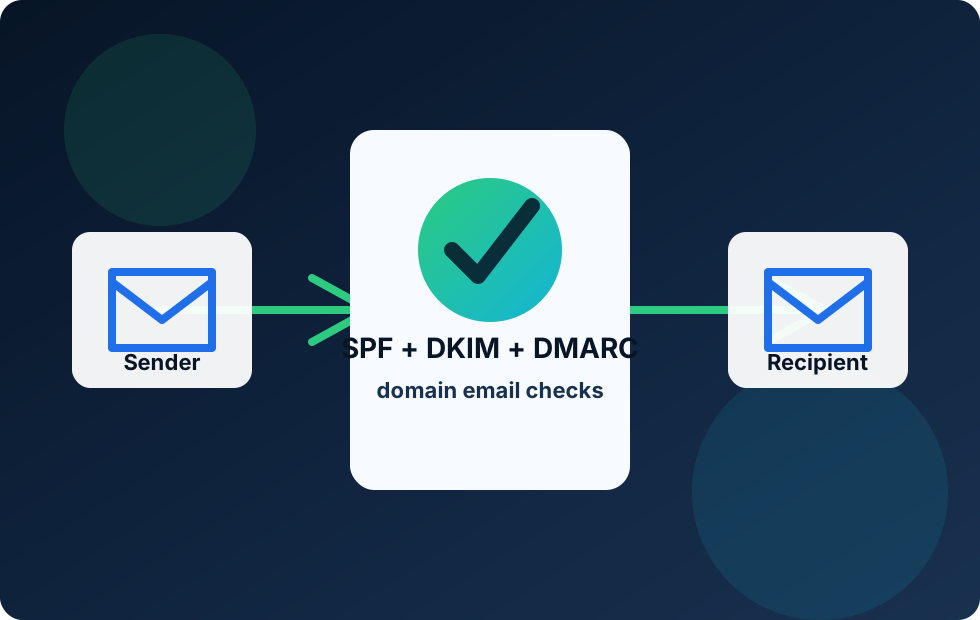
SPF, DKIM and DMARC are designed to work together. SPF checks the server path. DKIM checks the signature. DMARC checks whether SPF or DKIM align with the visible From domain and then applies the domain owner's policy.
For a business, DKIM is often the piece that makes the authentication setup more resilient. If a message passes DKIM and the signing domain aligns with the visible From domain, DMARC can treat that as a valid pass even if SPF has trouble because of forwarding. This is one reason DKIM should not be treated as optional decoration. It is a practical part of keeping domain email trustworthy.
Cloudflare describes DKIM as authenticating the sender's domain and helping verify that email content was not altered in transit. That simple explanation is useful for customers: DKIM helps prove that the message has a valid domain signature and has not been quietly changed after it was signed.
DKIM should be checked whenever a domain changes DNS provider, email platform or third-party sending service. The mail server can sign messages only if the matching public key is published correctly in DNS, so DNS changes and email changes need to be kept together.
Old DKIM records should also be reviewed. If a supplier no longer sends mail for the domain, its selector may no longer be needed. Keeping DKIM tidy helps the domain tell a clearer story about which services are allowed to sign business email.